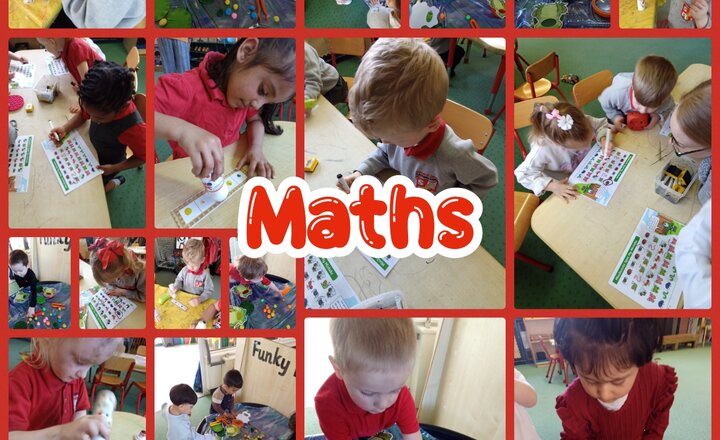
Nursery/Pre-school- Maths- My Pattern
In Maths this week the children have been working on an arrangement of Patterns. Working on patterns helps children understand simple pattern routines which this later translates into spotting patterns in numbers (like the 10s times table ending in 0) and recognising the structure of phonics in reading.
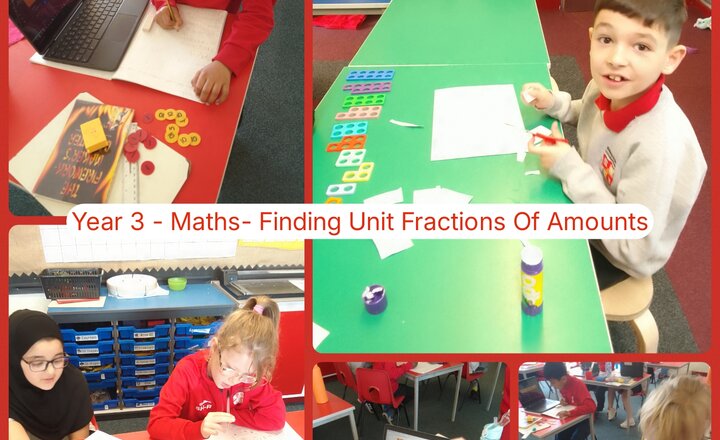
Year 3 - Maths - Finding Unit Fractions Of Amounts
Year 3 have been smashing their fractions unit this week. We've been mastering finding fractions of amounts by using our times tables knowledge.
.jpg)
Year 2 - Maths - Finding Half
In our latest Year 2 maths session, our young mathematicians turned their whiteboards into "fraction stations" to explore the concept of finding half of a quantity. By using a fraction bar to represent the whole, the children carefully shared out physical counters into two equal groups, ensuring they understood that halving is the same as dividing by two. This hands-on approach helped the pupils move from concrete objects to abstract thinking, as they visualised how 1/2 of a set of items can be calculated quickly and accurately. There was a fantastic "lightbulb moment" across the classroom as they realised that for the groups to be fair, each side must hold the exact same number of counters!
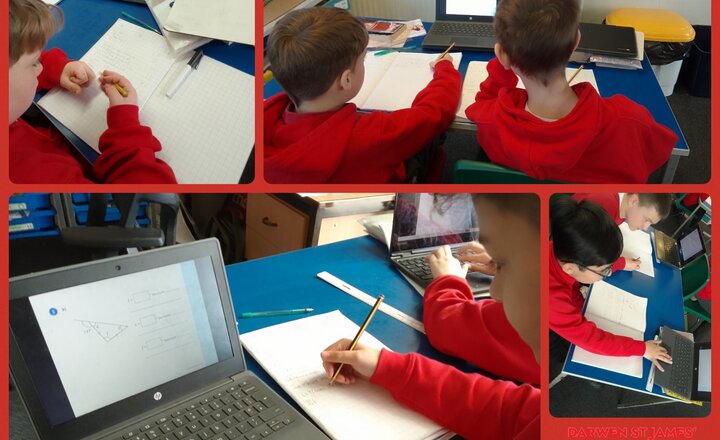
Year 6: Maths - Geometry
This week year 6 are continuing their unit on geometry. They have been focusing on understanding angles in triangles, vertically opposite angles, and how to apply their previous knowledge to new contexts.
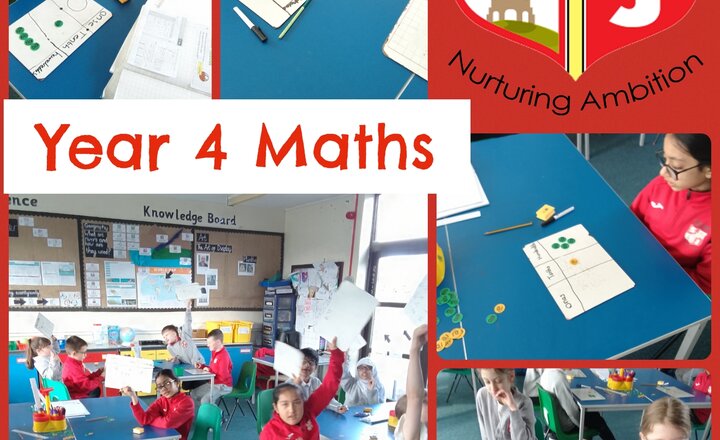
Year 4 Maths - Tenths and hundredths on a place value chart
It's been a challenging return to school, working through our Maths Decimal topic. But Year 4 have worked hard! We have used counters on a place value chart to represent decimal numbers and help our understanding to be able to complete our classwork independently.
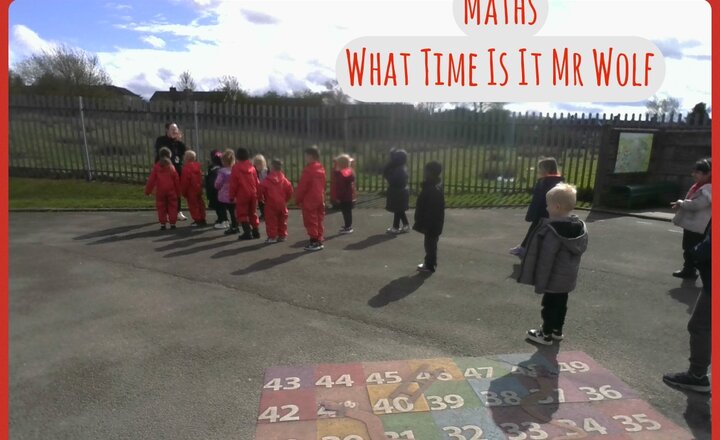
Reception- Maths- What Time Is It Mr Wolf?
The Reception class enjoyed a lively game of “What Time Is It, Mr Wolf?”, which gave them a fun and purposeful way to practise counting beyond ten. As the “Wolf” called out times like thirteen or fifteen, the children counted aloud together, taking one careful step for each number. This combination of speaking, listening and movement really helps to strengthen their understanding of number order and one-to-one counting. Moving across the space while working through the “teen” numbers made the learning feel exciting and meaningful. It was great to see their confidence grow as they became more comfortable counting larger numbers in such a playful and engaging way.
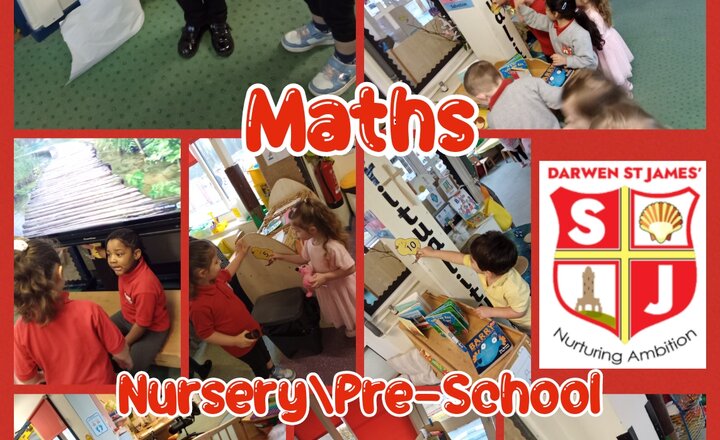
Nursery - Maths - Number Hunt
This week, the children in Pre-school have been sharpening their number recognition skills through a high-energy "number hunt" around the classroom. We hid twelve little chicks, each marked with a number from 0 to 11, in various spots for the children to discover during their play. The activity began during independent learning time, where the children enjoyed spotting the chicks at random. This initial phase allowed them to practice recognizing different numerals in a relaxed and exploratory way. During our focused lesson, the challenge was increased as the children were tasked with finding the chicks in the correct numerical order. This required the children to think carefully about the counting sequence, identifying which number would come next before scouring the room to find the matching chick. There was a wonderful sense of excitement throughout the lesson, and it was lovely to see the children's joy as they successfully located the next number in the sequence. This hands-on approach effectively combined physical movement with sequential thinking and purposeful number recognition.
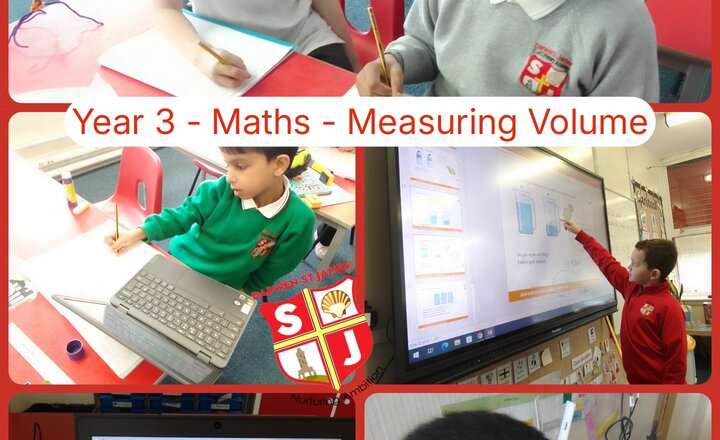
Year 3 - Maths - Measuring Volume
Our Year 3 mathematicians have been following the White Rose Maths small steps this week, moving from "Measuring Volume" to "Measuring Capacity." We’ve been busy building our fluency by reading scales and comparing amounts using l and ml The classroom has been a "hive of heuristics" as we used concrete resources to visualize exactly what 1,000ml looks like compared to a single litre. We’ve even been practicing our bar models to help us add and subtract volumes like pros!
.jpg)
Year 2 Maths: Arithmetic Practice
Our Year 2 mathematicians have been sharpening their arithmetic skills! We’ve been exploring a whole "toolbox" of different strategies to help us solve calculations quickly and accurately. It wasn't just about getting the right answer, but finding the most efficient way to get there.
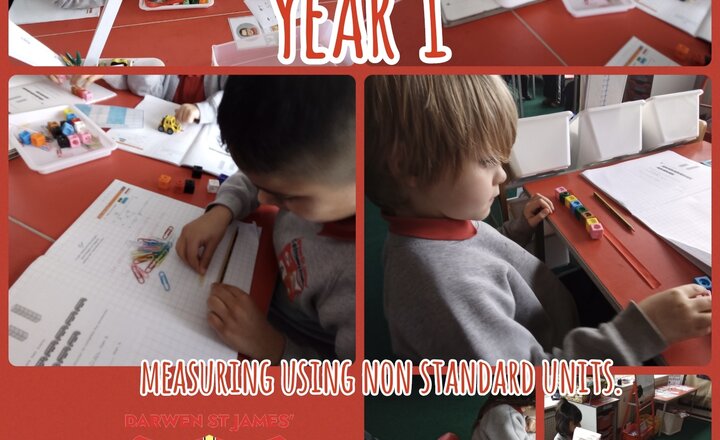
Year 1 - Maths - Measuring Using Non Standard Measurements
Does your child know how many paperclips long their favorite toy is? This week in Year 1, we are diving into non standard measurement. We aren't using cm just yet—instead, we’re using cubes and paperclips to understand the concept of a unit. Try it at home: Ask your little one to measure their dinner plate using pasta pieces or Lego bricks! Just remember the golden rules: Line them up straight. No gaps. No overlapping! #Year1 #LearningAtHome #WhiteRoseMaths #EarlyMaths #Measuring
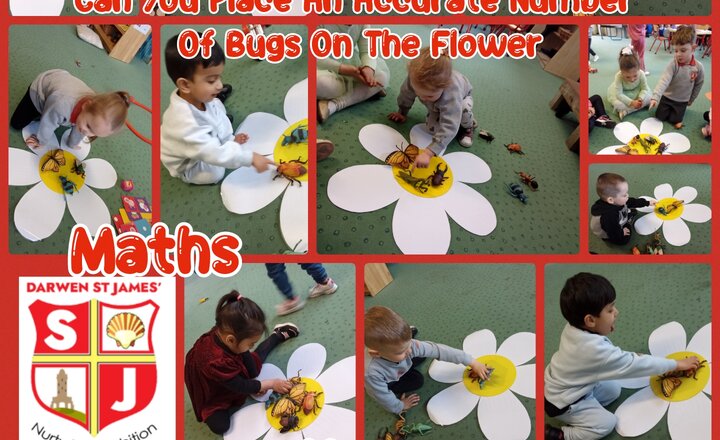
Nursery/Pre-School - Maths - Can You Place An Accurate Number Of Bugs On The Flower
This week, the children took part in a fun, bug-themed counting challenge. The activity focused on their ability to listen to a specific number and accurately represent that quantity by placing bugs onto a giant flower. When asked a question like "Can you place three bugs on the flower?", we made sure to give the children plenty of "thinking time." This allowed them to process the instruction and reflect on the number they heard before beginning the task. The children then practiced their one-to-one correspondence, carefully picking up and placing each bug one at a time until they reached the target number. To finish the task, the children were encouraged to count the bugs already on the flower to check their own work. This helped them reflect on whether the amount they had placed matched the number they were originally asked for. This hands-on approach was a fantastic way to build their confidence in counting and their understanding of how numbers relate to a physical group of objects.
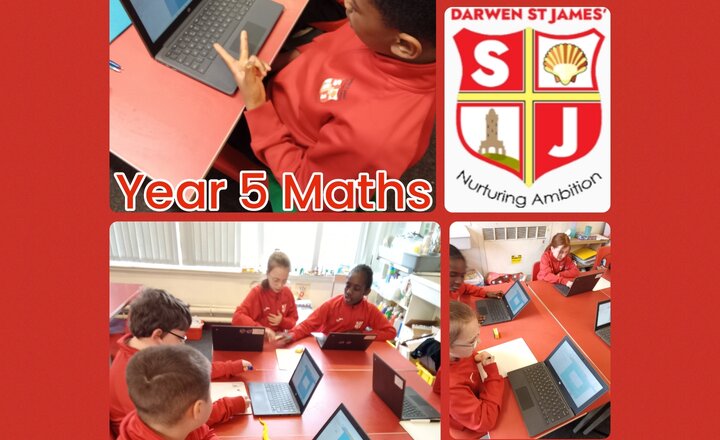
Year 5 Maths - Collaborative Learning with LBQ
Perimeter & Area: Mastering Measurement with LBQ! This week, Year 5 have been putting their geometry skills to the test as we consolidated our learning on Perimeter and Area. To sharpen our mathematical thinking, we dived into the LBQ (Learning By Questions) platform, which provided a series of tricky challenges to solve. The classroom was buzzing with mathematical talk as the children worked collaboratively in groups. It wasn’t just about finding the right answer; it was about the strategy. Groups were heard debating different methods, checking each other's calculations, and explaining their reasoning. What impressed us most was the incredible perseverance on display. When a question didn’t turn ‘green’ on the first attempt, the children didn’t get discouraged. Instead, they used the instant feedback to rethink their approach, discuss their mistakes, and try again until they succeeded. A brilliant display of teamwork and a real 'growth mindset' in action. Well done, Year 5!
.png)