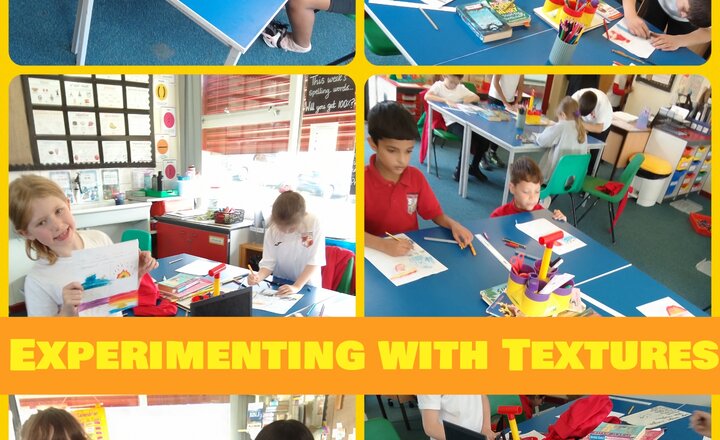
Year 4 Art - Experimenting with Textures
Continuing with their Storytelling through Art, Year 4 have practised experimenting with different resources to create different textures, ready to apply all of these skills we have looked at these past few weeks to create their final product. We are expecting some amazing results with what has been produced so far!
.jpg)
Year 2 - Art - Exploring Composition
Our Year 2 artists took their learning outside for an exciting project on composition. After collecting a variety of natural objects, the children thoughtfully arranged them into beautiful and creative patterns. They then photographed their temporary masterpieces, and we can’t wait to use the images as a guide for our next project: a fabulous collage!
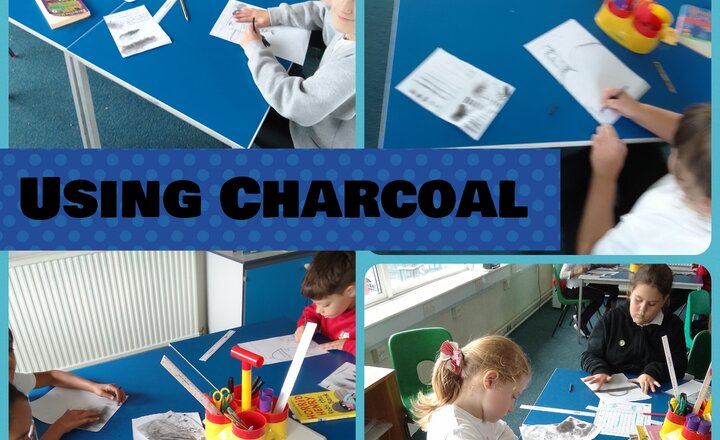
Year 4 Art - Drawing with Charcoal
Year 4 are continuing to extend their skills of storytelling through drawing, and this week have used charcoal to create different effects and create an image that tells a story. The results were amazing!
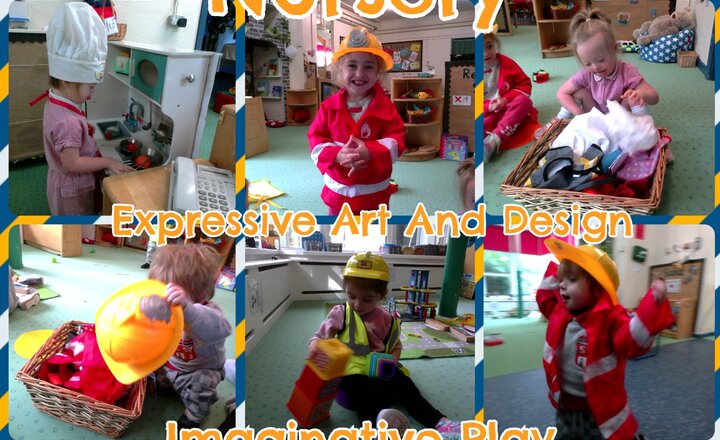
Nursery - Expressive Art And Design - Imaginative Play
In our Expressive Arts and Design lesson, the children had a wonderful time exploring our dressing-up basket, which was full of different costumes. Each child took a turn to choose an outfit, transforming into a variety of characters and people, from a police officer, firefighter, and builder to a doctor and chef. The children embraced their roles and acted out different scenarios. Some children took great care of the babies, taking their temperature and checking their heart beats, while others worked together to build structures with various resources. We also had a chef who had a wonderful time using their imagination to cook up some yummy dinner in the home corner. This activity provided a wonderful opportunity for the children to develop their creativity and imagination, while also exploring different roles and experiences in the world around them.
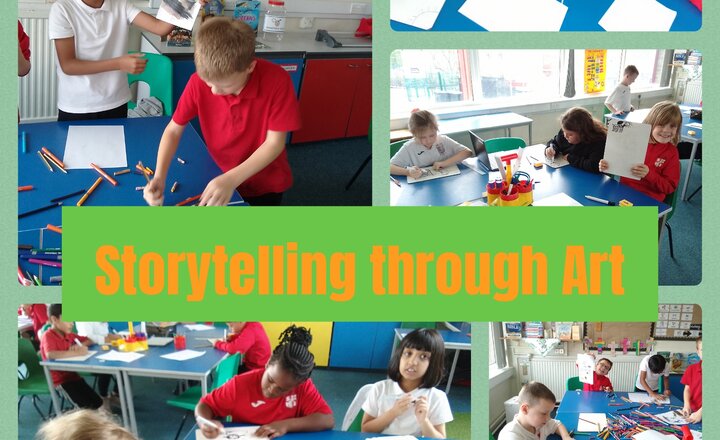
Year 4 Storytelling Through Art - Art
Year 4 have been introduced to telling stories through their artwork. We have looked at how texture, colour and the actual artwork itself can impact how a story is viewed or perceived. We are looking forward to creating our own stories, using this method.
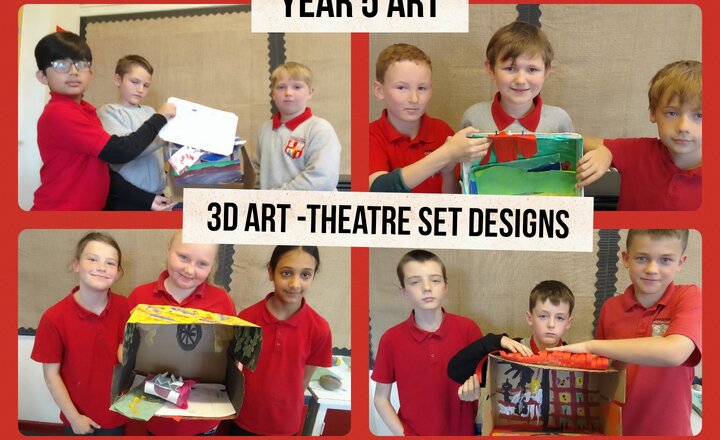
Year 5 Art - 3D Art: Theatre Set Designs
This week, Year 5 immersed themselves in the captivating world of theatre set design, following the comprehensive Access Art programme. After critically examining the remarkable work of the set designer for War Horse, students were inspired to sketch initial ideas for their very own theatre productions. They then thoughtfully selected a story to bring to life on their stages, with imaginative choices ranging from The Lion, The Witch and the Wardrobe to The Little Mermaid and even a Minecraft Movie adaptation! These creative visions were then expertly translated into impressive 3D models.
.png)
Year 3 Learning How To Draw A Dog
Year 3 unleashed their inner artists today, following step-by-step instructions to draw fantastic Dalmatian dogs!
.jpg)
Year 4 Art
Year 4 have been studying different types of art displays, particularly statues that are displayed on plinths. We have created our our plinths and statues out of paper and card, and needed to solidify these items using paper-mache techniques. It was a very messy job, but lots of fun in the end!
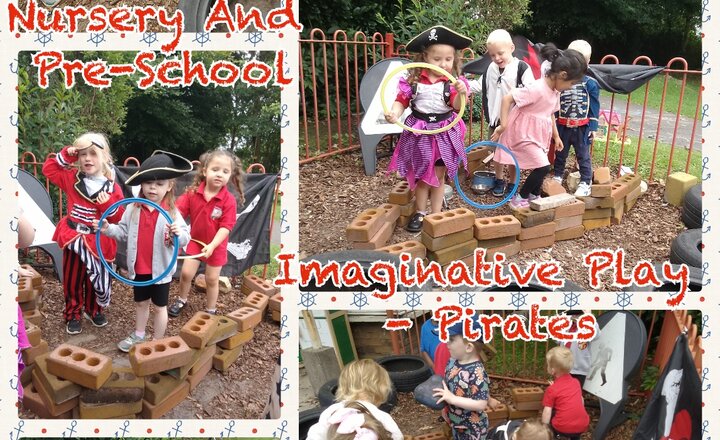
Nursery And Pre-School - Imaginative Play, Pirates!
The nursery and preschool children have loved the pirate theme this week, quickly selecting dress-up items to transform into swashbuckling pirates. A significant highlight was the children's collaborative effort in constructing a pirate ship using the jumbo building bricks. They worked together, demonstrating emerging cooperation and negotiation skills as they discussed where to place bricks or how to make the ship bigger. Once their magnificent ship was constructed, the children climbed aboard, steering their vessel and actively sailing their ship across the imaginary seas. They eagerly engaged in target practice, throwing 'cannonballs' at 'enemy ships' in the distance. This action-packed segment refined their gross motor skills, including throwing and aiming, and further fueled their imaginative narrative.The rich vocabulary used by adults (e.g., "Ahoy, matey!", "Walk the plank!") was frequently echoed by the children, showcasing developing communication and language skills within their play.
.jpg)
Nursery - Art And Design - Sensory Play Ice-Creams
The children showed delight and engagement with the shaving foam. Their initial response was tactile, poking, squishing, and spreading the foam, exploring its texture directly. The activity quickly transitioned into imaginative play as children began making "ice creams." They demonstrated developing hand-eye coordination and fine motor control by actively scooping foam into cones and cups. Using shakers to add "sprinkles" further refined their fine motor skills through precise grasp and release. Rich imaginative role-play emerged, with children offering their foam creations to peers and adults, exclaiming "Yummy!" or "Ice cream!" This showed budding communication and language skills and engagement in pretend scenarios.
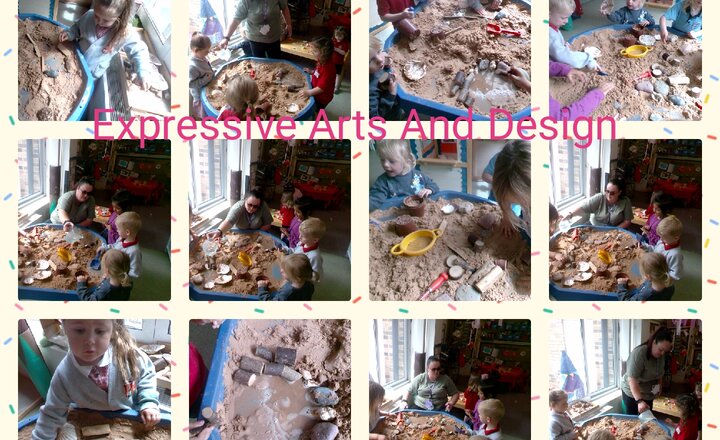
Pre-School - Expressive Art And Design - Creative Play - Making Rockpools
In Pre-school this week our story is- Sharing a Shell, the children have really enjoyed this story especially learning about rockpools. The children created their own rockpool in our sand tray, selecting different materials such as rocks, wood, shells, twigs and pinecones. They created a circle shape in the sand and built a wall around their shape using these materials and then I poured water into their rockpool to see if their wall would hold the water or would the water pour out. This type of hands-on, imaginative play directly supports several EYFS learning areas: Understanding the World: Children explore a miniature ecosystem, learning about marine life, natural habitats, and different materials. They might discuss where rockpools are found, what creatures live in them, and the characteristics of various natural elements. Communication and Language: As children create and interact with their rockpool, they naturally engage in conversations. They might describe what they are doing, ask questions, explain their choices of materials, and even create stories about the creatures living in their rockpool. This enhances their vocabulary, listening skills, and ability to express ideas. Physical Development (Fine Motor Skills): Manipulating different materials like sand, pebbles, shells, and water helps to develop fine motor skills, hand-eye coordination, and dexterity. Scooping, pouring, arranging, and picking up small objects strengthens the muscles in their hands and fingers. Expressive Arts and Design: Children are using their imagination and creativity to design and construct their rockpool. They are making choices about materials, textures, and arrangements, essentially creating a miniature world. This also allows for sensory exploration as they touch and feel different elements. Personal, Social and Emotional Development: If children are working together, they develop social skills like sharing, taking turns, and collaborating. The open-ended nature of the activity also allows for emotional expression and can be a calming, sensory experience. Mathematics: Children might engage in early mathematical concepts by sorting materials (e.g., by size, type), counting shells or pebbles, or discussing quantities of sand and water. Problem-Solving Skills: Children might encounter small "problems" to solve, such as how to make the water stay in a certain area or how to arrange the rocks to create a sheltered spot.
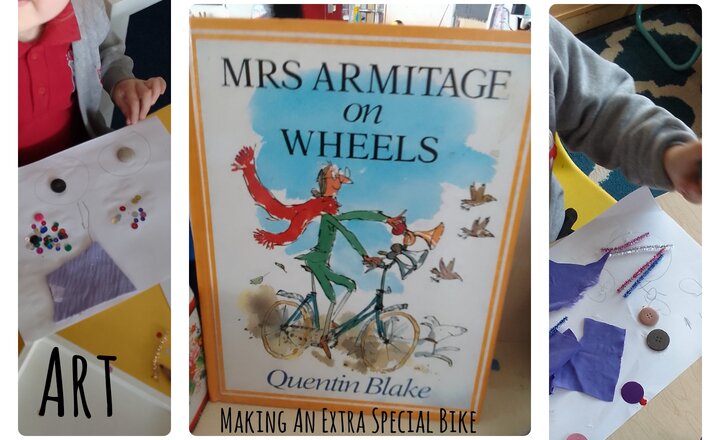
Reception - Art and Design - Creating Bikes!
This week, Reception have been using their artist’s eyes to create something extra special! Inspired by Mrs Armitage on Wheels by Quentin Blake, we designed and made our own spectacular bikes – each one bursting with colour, creativity and imagination. We paid close attention to shape, texture and detail, using a wide range of materials like buttons, sequins, fabric and pipe cleaners. It was all about looking carefully, making thoughtful choices and expressing our own ideas – just like real artists do. Developing our observational skills helps us in so many areas of learning, from early writing and drawing to science and maths. It’s amazing what you notice when you really stop and look! And just like Mrs Armitage, we’re always thinking about how we can add that little bit extra.
.png)